Devastating Floods in Nepal
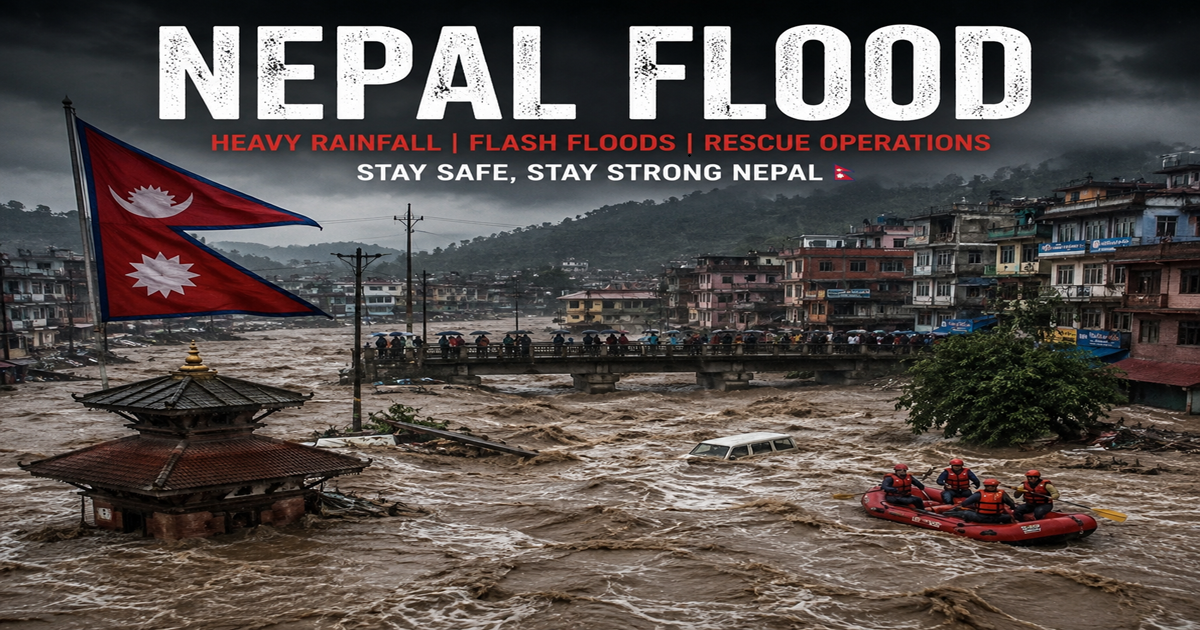
Devastating Floods in Nepal: A Himalayan Disaster Leaves Behind Widespread Destruction
Nepal is currently facing one of its most serious natural disasters. On August 26, 2026, a sudden and extremely powerful flash flood struck the Himalayan region near the Nepal-China border, causing widespread destruction. The flood, accompanied by fast-moving rocks, mud, and debris, damaged homes, roads, bridges, and hydropower projects.
How Did the Devastating Flood Occur?
According to reports, the disaster began in the Himalayan region after a large amount of rock, ice, and debris entered the river system. The sudden flow of water and debris quickly turned into a powerful flash flood.
The impact was particularly severe in Rasuwa and areas around the Bhote Koshi and Trishuli river systems. The flood moved so quickly that many people had little or no time to reach safer locations.
Thousands of People Affected, Rescue Operations Underway
The scale of the disaster can be understood from the number of people affected. Hundreds of deaths have been reported in Nepal, while thousands of people are still reported missing.
As of August 31, available reports have put the number of deaths in Nepal at more than 900, while more than 4,200 people have reportedly been listed as missing. These figures may continue to change as rescue teams reach remote areas and search operations continue.
The Nepal Army, police, and other emergency response teams are working continuously to rescue people trapped in affected areas. Helicopters, drones, and heavy machinery are being used wherever possible.
One of the biggest challenges is reaching people who may be trapped inside tunnels connected to hydropower projects. Hundreds of workers are feared to have been caught inside some of these facilities.
Roads and Bridges Destroyed
The floods have severely damaged Nepal's transportation infrastructure. Several roads and bridges have been washed away or buried under large amounts of debris, making it difficult for rescue teams and relief supplies to reach affected communities.
Important routes connecting Nepal with China have also been affected. The disruption of transportation and communication has created additional difficulties for local residents, particularly in remote mountain areas where access to food, drinking water, medicines, and other essential supplies has become challenging.
Heavy Damage to Hydropower Projects
Hydropower plays an important role in Nepal's economy, but the disaster has also caused significant damage to several hydropower projects.
Many workers were reportedly working at these facilities when the flooding occurred, and some may have become trapped inside tunnels. Damage to hydropower infrastructure could also affect electricity generation and create additional economic challenges for the country.
Environmental and Climate Change Concerns
The disaster has once again raised serious concerns about the Himalayan environment and the potential impact of climate change.
Scientists have warned that rising temperatures and changes in Himalayan glaciers can increase instability in glaciers, ice, rocks, and glacial lakes. Such changes may increase the risk of sudden floods, landslides, and other natural hazards in vulnerable mountain regions.
However, it is important not to attribute a single disaster directly to climate change without scientific evidence. At the same time, the rapidly changing Himalayan environment highlights the need for better monitoring, research, and disaster preparedness.
Support from India and Other Countries
The disaster has affected not only local communities but also foreign nationals and travelers in the region. Reports have also highlighted concerns about Indian citizens who may be missing or affected by the disaster.
India and other countries have offered assistance to Nepal during this difficult period. International cooperation and humanitarian support are especially important during large-scale disasters, when local resources can become overwhelmed.
Protecting Lives Is the Biggest Priority
The most important priority for Nepal right now is to save lives, locate missing people, and provide food, drinking water, medicines, shelter, and other essential supplies to affected families.
Rescue operations in remote mountain areas remain extremely challenging because of difficult terrain, debris, damaged roads, and changing weather conditions. Despite these challenges, thousands of rescue workers continue to work around the clock to reach people and bring them to safety.
What Can Be Learned from the Nepal Floods?
The disaster highlights the importance of stronger disaster-preparedness systems in Himalayan regions. Early-warning systems, better weather and geological monitoring, emergency communication networks, and well-planned evacuation routes can help reduce the loss of life during future disasters.
Mountain communities are particularly vulnerable because difficult terrain can make rescue operations slow and complicated. Investing in modern technology, local emergency training, and stronger infrastructure can make a significant difference.
Conclusion
The devastating floods in Nepal are more than just a natural disaster. They are a serious reminder of how vulnerable Himalayan communities can be to sudden and extreme natural events.
Hundreds of families have lost loved ones, while thousands of people have been affected, displaced, or remain unaccounted for. Homes, roads, bridges, businesses, and critical infrastructure have suffered extensive damage.
The immediate priorities are clear: save lives, find missing people, provide emergency assistance, and restore essential infrastructure.
In the longer term, Nepal and other Himalayan countries will need stronger early-warning systems, improved disaster management, better infrastructure, and continuous scientific monitoring of the region.
Our thoughts and prayers are with the people of Nepal, the affected families, and the rescue workers who are risking their lives to help others during this difficult time. 🙏
0 comments